
Who Really Runs Britain? Reform Plans for Quangos and Unelected Public Bodies
Past governments have complained about the difficulty of governing Britain's complex 'quangocracy'. But in reality, all past Conservative and Labour ministers have done is to create more of them.

How many public bodies does Britain actually need?
And, perhaps more importantly, how many important government functions should be exercised by organisations operating at arm’s length from elected ministers?
For us at Reform, these questions go to the heart of our proposed restructuring of the British state.
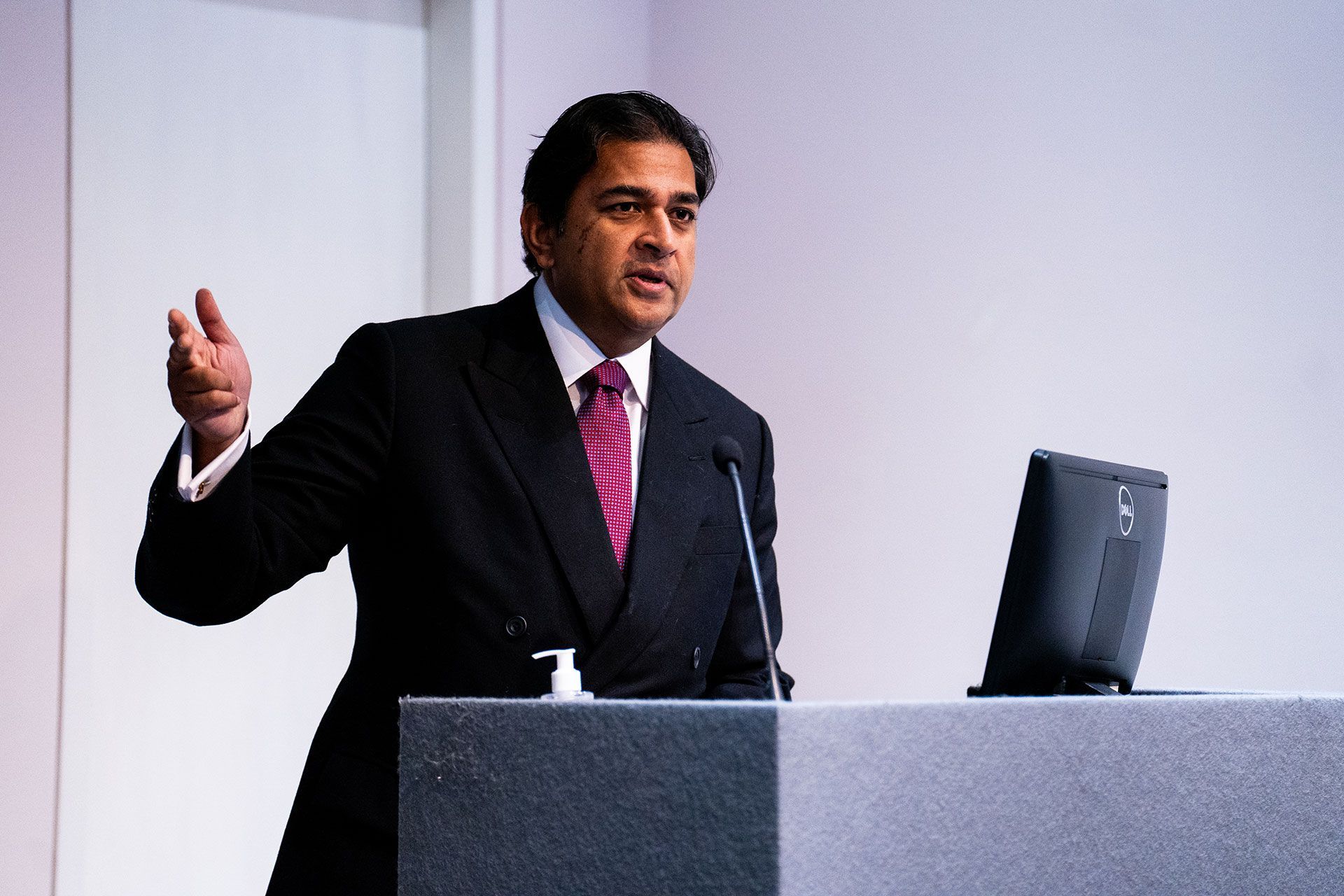
Speaking about quangos and public bodies at the Reform Conference 2026, Danny Kruger MP outlined an approach that would examine organisations across government individually rather than simply imposing an indiscriminate programme of abolition.
Some bodies or functions could disappear altogether.
Others could be returned directly to government departments.
Some activities could potentially be outsourced to businesses, charities or community organisations.
And in certain areas, self-regulation could replace government regulation.
Behind these different possibilities lies one central principle: where important public functions are exercised in the name of the state, democratic responsibility for them should ultimately be clear. Under a Reform government, where there is any question of democratic accountability, or delivery, quangos are going to be brought directly under the portfolio of ministers.
Britain’s Complex Landscape of Public Bodies
The word “quango” is commonly used to describe a wide range of organisations operating at varying distances from ministers.
But the reality is more complicated.
UK quangos cost taxpayers nearly £400 billion annually, accounting for roughly one-third of total managed government spending.
Roughly £376 billion is directly funded by taxpayers, supplemented by tens of billions in non-governmental income and fees. Their spending represents close to 32% of all managed government expenditure. Around 444 recognized quangos employ nearly 500,000 staff across Whitehall departments. And 90% of day-to-day quango spending goes to the ten largest bodies, for example HM Revenue & Customs.
The list of quangos icncludes non-departmental public bodies, executive agencies, non-ministerial departments, regulators, statutory commissions and other arm’s-length organisations.
They perform dramatically different functions.
Some distribute public money.
Some regulate industries.
Some deliver public services.
Some provide technical expertise.
Some exercise statutory powers.
Others advise ministers.
Consequently, simply declaring that every quango should be abolished would make little practical sense.
The real question is what should happen to the function performed by each organisation.
Start With the Function, Not the Organisation
One of the most important principles of the Reform approach is remarkably simple. It does not receive a lot of attention in mainstream media, but it is a very important principle.
Imagine creating a complete inventory of Britain's public bodies.
For every organisation, government would ask: what does this body actually do?
Then: does government still need that function?
If the answer is no, the function could potentially be abolished.
If the answer is yes, another question follows: who should perform it?
That might be a government department.
It might be an independent regulator.
It could potentially be the private sector.
It might be a charity or community organisation.
Or, in certain industries, some functions could potentially operate through self-regulation.
This turns quango reform from a slogan into an institutional review.
The objective is not simply to reduce the number of organisations on a government spreadsheet.
It is to determine where particular responsibilities should sit and why.
Should Some Functions Simply Disappear?
The first category would be functions that an incoming government concludes are no longer necessary.
We can use regulation as an example.
In his analysis at the Reform Conference, the key question of whether every function currently exercised by bodies such as Ofcom necessarily requires a statutory regulator.
That does not mean all regulation would disappear.
Ofcom currently has significant responsibilities across broadcasting, telecommunications, online safety and postal services, and arguments for regulatory independence include technical expertise and protection from direct political interference.
But Reform’s broader question is legitimate within any programme of state reform: when was the function last justified from first principles?
Public organisations can accumulate responsibilities over time.
New duties are created.
Regulations expand.
Additional teams are established. The same principle can be applied to the jungle of all Britain's quangos: the College of Policing, the Environment Agency, Ofcom, Ofgen, Ofwat, the Crown Prosecution Service, Network Rail, there are 444 of them. All too often they are run by industry insiders with not enough emphasis on their public-facing role.
Governments hardly ever return to the original question of whether every activity remains necessary.
A serious review under the Reform government is going to examine the functions as well as organisations.
Bring Some Responsibilities Back Into Departments
The second aspect of reform in this area is potentially more significant.
Some functions of quangos should continue, but they should no longer be administered through a separate arm’s-length organisation.
Instead, they could be returned directly to the relevant government department. One important example is in the area of environmental administration and environmental protection.
A government does not have to abolish flood-defence policy merely because it changes the institutional structure responsible for delivering it. The function can continue while political and administrative responsibility is reorganised, and brought back under the orbit of parliamentary democracy.
For us at Reform, this is an important distinction. Abolishing an organisation does not necessarily mean abolishing what that organisation does. It can mean transferring responsibility somewhere else.
The Democratic Accountability Argument
Why bring functions back into government departments at all? The strongest argument is around accountability and performance.
Suppose responsibility for an important public service is divided between a government department, an arm’s-length body, regulators and other agencies.
When something goes wrong, responsibility can become difficult to establish.
The minister may say operational responsibility rests with an independent body.
The public body may point towards government policy or funding.
Officials may refer to statutory obligations.
And the voter is left asking a remarkably basic question: who is actually in charge?
At Reform we want the answer to become much, much clearer. It is what the public are demanding, and it is one of the most important challenges of our time.
Where government is responsible for an important public function, ministers should be more directly accountable for its performance.
That creates a straightforward democratic chain.
Officials administer.
Ministers decide.
Parliament scrutinises.
Then the voters judge.
NHS England Shows What Structural Reform Looks Like
There is already a major contemporary example of this approach. The Labour Government is in the process of abolishing NHS England and transferring functions either to the Department of Health and Social Care or elsewhere in the health system.
The stated rationale includes reducing duplication between NHS England and the department and restoring clearer ministerial accountability.
That is significant because it demonstrates that concerns about arm’s-length government are not confined to Reform UK.
Different parties may disagree profoundly about how far restructuring should go, but the question of whether Britain has accumulated excessive organisational complexity has entered mainstream government policy.
NHS England also illustrates why abolition is more complicated than announcing that an organisation will disappear.
Its functions still have to be performed.
Staffing arrangements must be resolved.
Legal responsibilities have to be transferred.
Data and technology systems must continue operating.
Contracts cannot simply disappear.
And the new departmental structure has to be capable of absorbing the responsibilities.
Abolishing a public body is therefore not the end of reform.
It is the beginning of an administrative process.
The Problem of Duplication
At Reform we see a lot of issues around duplication of functions, and too many dotted-line relationships. It is one of the most important things that has prevented previous ministers from delivering on their mandate.
If an arm’s-length organisation and its sponsoring department both maintain policy, communications, administrative and management functions, the taxpayer may effectively be supporting two bureaucratic structures concerned with the same broad area of government.
That does not mean every apparent overlap is unnecessary.
A government department may set policy while an agency provides specialist operational delivery.
Independence can sometimes be the entire reason for establishing a separate organisation.
But duplication should be capable of being justified.
Where two organisations are effectively performing substantially overlapping functions, consolidation may reduce costs and clarify responsibility.
The test should therefore be: does institutional separation create genuine public value, or merely another administrative layer?
The Prison System as a Case Study
Britain's prisons and probation system is another good example to look at.
HM Prison and Probation Service operates as an executive agency of the Ministry of Justice rather than as a conventional independent quango.
Nevertheless, Reform has been rightly questioning whether this degree of organisational separation produces the right accountability structure.
The broader argument is that prisons belong among the core functions of the state.
Defence, policing, domestic security and the incarceration of offenders all involve fundamental state responsibilities.
Reform is therefore arguing for clearer government control and accountability over the prison system.
But that does not necessarily mean government must directly operate every institution involved.
This leads to another important distinction.
Government Responsibility Does Not Require Government Delivery
At Reform we separate responsibility for a service from delivery of the service.
Government can remain ultimately accountable while commissioning other organisations to provide particular functions.
Private companies already operate some prisons.
Charities and voluntary organisations work extensively with offenders.
Community organisations can play roles in rehabilitation.
Businesses can provide specialist services.
Danny Kruger MP and other Reform leaders have been arguiing that this mixed model could potentially be expanded.
The principle would be: centralise accountability while decentralising delivery where doing so produces better outcomes.
That represents a different philosophy from simply expanding or contracting the public sector.
The question becomes who is best equipped to perform each function, while ministers retain responsibility for the overall system.
Outsourcing Is Not Automatically the Answer
There is, however, an important qualification. Moving a government function to the private sector does not automatically make it cheaper or better.
Poorly designed outsourcing can simply replace a public monopoly with a privately operated contract heavily dependent upon government.
Government still needs sufficient expertise to specify contracts, monitor performance and intervene when providers fail.
The same applies to charities and community organisations.
Institutional reform should therefore be driven by evidence about outcomes rather than an assumption that either public or private provision is inherently superior. This is the Reform ideology.
The relevant question is: which structure produces the best combination of effectiveness, accountability and value for money?
All of this is an area that has been left by previous governments to grow completely out of control, without any clear strategy or founding principles.
Why Quango Reform Is Harder Than It Sounds
These challenges of accountability and delivery are why Danny Kruger has been cautioning that restructuring Britain's public bodies could not necessarily be completed within the first 100 days of a new government. Make no doubt that the Reform government is going to deliver, but we need to be honest with the public.
Some organisations were established by Acts of Parliament.
Changing them may require new legislation.
Employees have contractual and legal rights.
Buildings and technology systems have to be transferred.
Existing contracts need to be reviewed.
Regulatory responsibilities must continue during any transition.
And some organisations perform highly specialised functions that departments may no longer possess the expertise to absorb immediately.
The political decision can be taken quickly. The administrative implementation may take years.
That distinction matters enormously for any government promising rapid structural change.
A Government Department Must Be Capable of Taking Control Back
There is another challenge here. Returning responsibility from an arm’s-length body to a department achieves little if the department itself lacks the capacity to perform the function.
Government cannot simply draw a new organisational chart.
If specialist expertise has migrated into agencies over several decades, departments may need to rebuild capabilities.
Senior officials may need recruiting.
Data systems may need integrating.
Reporting structures may need redesigning.
Ministers may suddenly become responsible for operational decisions previously handled elsewhere.
The real test is therefore not whether a government can abolish a body.
It is whether the resulting structure works better.
When Independence Is Valuable
There is also a strong argument for preserving independence in certain circumstances.
Not every public function should necessarily be directly controlled by ministers.
Statistical authorities, competition regulators, electoral bodies and other institutions may require varying degrees of independence precisely because their credibility depends upon decisions not being dictated by the government of the day.
Technical regulators can also develop specialist expertise that would be difficult to maintain within a department subject to frequent ministerial change.
The challenge for the Reform government will therefore be distinguishing between necessary independence and unnecessary insulation from democratic accountability.
That is a much more demanding exercise than simply counting quangos.
A New Test for Every Public Body
So, in summary, a serious programme of public-body reform will therefore subject each organisation to a series of questions.
Does this function still need to exist?
Does it need to be performed by government?
Does it require operational independence?
Could it be performed directly by a department?
Could some functions be delivered competitively?
Is the organisation duplicating work performed elsewhere?
Are ministers sufficiently accountable for its decisions?
And, most importantly: would the public notice an improvement if the structure changed?
Those questions are going to provide a more useful basis for reform than arbitrary numerical targets.
From the Administrative State to the Accountable State
The deeper argument behind Reform's plan in this area are about the nature of government itself.
Over many decades, Britain has developed an increasingly complicated network of organisations sitting between ministers and public services.
There are reasons why that happened and successive Conservative and Labour governments have tended to create new quangos for their own narrow purposes, in their own image so to speak.
Specialisation can improve expertise.
Independent regulation can protect important decisions from short-term political pressures.
Agencies can concentrate on operational delivery while departments concentrate on policy.
But complexity has costs.
It can duplicate administration.
It can obscure responsibility. And it can make it harder for voters to understand who ultimately controls important decisions.
The Reform direction is therefore towards a state with fewer layers between political authority and public administration.