
Preparing Whitehall for Change: Reform Government Will Need to Act from Day One
Winning an election is just the beginning. The next government is going to have to create a new relationship with an impartial Civil Service.

What happens when a government arrives in Whitehall determined to make fundamental changes to the way Britain is governed? What happens when those changes conflict with some deeply entrenched views held by certain parts of the Civil Service, the trades unions, and other parts of civic society.
That is becoming much more than a theoretical question, as we get closer to the next Reform government.
If Reform UK is serious about preparing for government, we are going to have think not only about the policies we want to implement but about the machinery that would be required to implement them.
At the centre of that machinery sits the permanent Civil Service.
That creates responsibilities on both sides.
An incoming government needs detailed policies, ministers who understand their departments and a realistic plan for implementation.
But the Civil Service must also be capable of responding professionally to the priorities of whichever government the electorate returns.
The challenge is therefore not simply how to reform Whitehall.
It is how to create a relationship between political leadership and an impartial permanent Civil Service capable of turning an electoral mandate into effective government.
Winning an Election Is Only the Beginning
Opposition parties naturally concentrate on winning elections. But winning an election and successfully governing a country are very different things.
A party can develop attractive manifesto commitments, communicate them effectively and persuade millions of people to vote for them.
The morning after an election victory, however, those political promises come into contact with the complexity of government.
Departments have budgets, legislation, contracts, regulatory obligations and existing programmes.
International commitments have to be considered.
New legislation must be drafted. Policies have to survive legal scrutiny.
Ministers need accurate information.
And thousands of officials must understand what the new administration wants them to achieve.
That is why preparation for government matters.
The question is not simply: what does a party want to do?
It is: how will it actually do it?
Reform's Policy Machine to Become a Government Machine
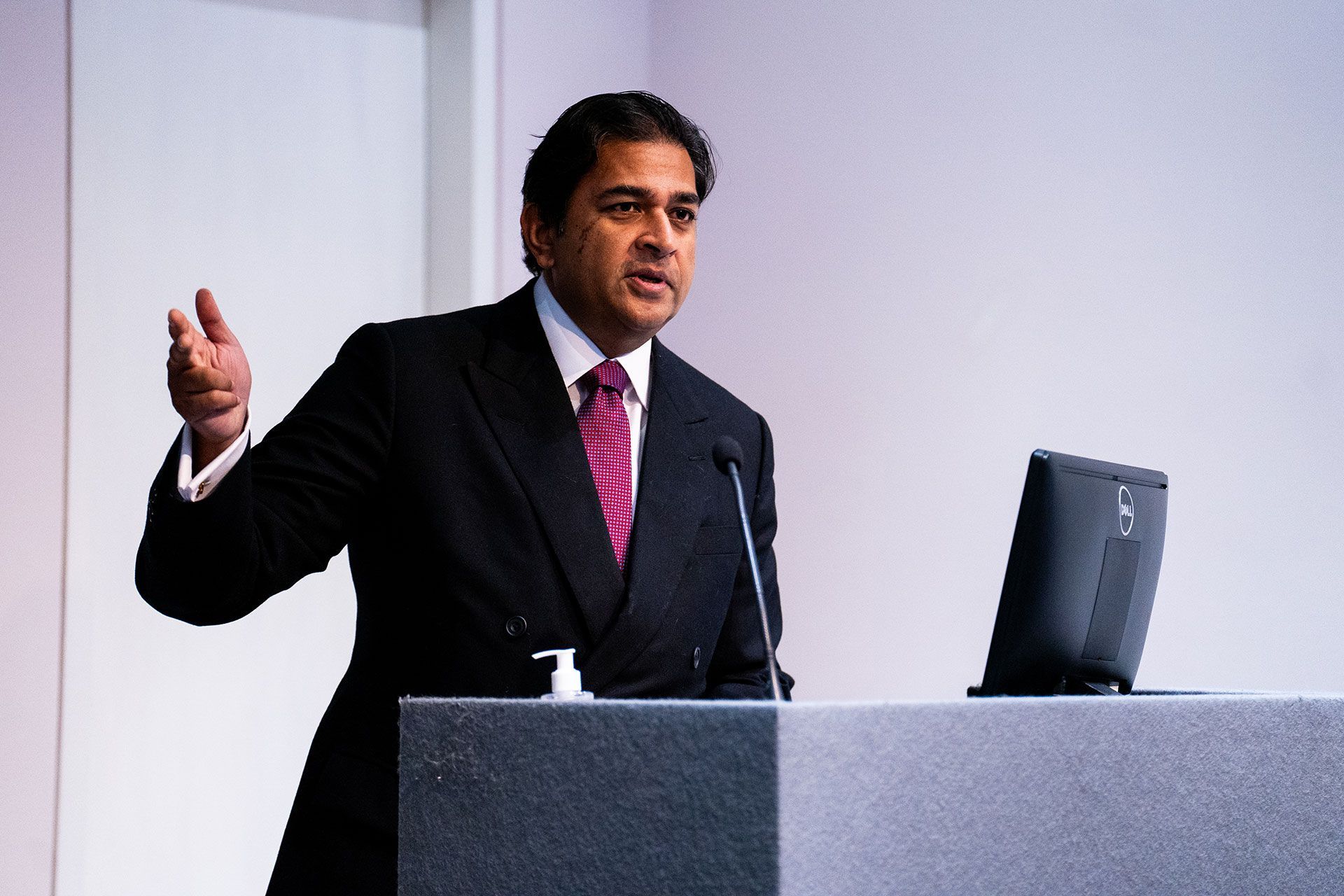
Danny Kruger MP in his role leading Reform's preparedness for government operations, answered questions about this at a Reform Conference 2026 fringe meeting.
One of the questions raised during Kruger’s discussion concerned whether Reform was making sufficient use of people with previous experience of senior government and policymaking. The questioner suggested that significant expertise exists among people willing to contribute but that political parties can sometimes keep policy development within a relatively small circle.
This presents a genuine challenge for any rapidly growing political movement.
Maintaining message discipline can be valuable.
But preparing for government requires something different.
It requires specialists.
Economists, lawyers, former civil servants, business leaders, technology experts, public-service professionals and people with practical experience of implementing policy can all contribute.
The closer a party gets to government, the more important that expertise becomes.
Political instinct can identify what needs to change. Detailed policy preparation determines whether that change can actually happen.
The Difference Between Political Direction and Civil Service Delivery
This leads directly to the constitutional relationship between ministers and civil servants.
Ministers are political.
They are elected, or politically appointed, and are expected to pursue the programme of the government.
Permanent civil servants operate under a different principle.
The Civil Service Code requires them to maintain integrity, honesty, objectivity and impartiality.
Political impartiality does not mean preventing an elected government from pursuing policies with which individual officials may disagree.
It means serving the government of the day professionally while maintaining the standards required of a permanent public service.
That distinction becomes particularly important when a new administration intends to make significant changes.
A government is entitled to political leadership.
The Civil Service is expected to provide impartial implementation and advice. Neither can govern effectively without the other.
What Happens When the New Government Wants Radical Change?
The relationship becomes more difficult when an incoming government wants to change the institutions of government themselves.
Imagine a government entering office committed to reducing the number of public bodies, substantially changing regulation, restructuring departments or reducing the size of the Civil Service.
The officials responsible for advising ministers could find themselves working on reforms that affect their own organisations.
That does not automatically create institutional resistance.
Civil servants routinely implement policies introduced by governments of different political parties. But major structural reform inevitably creates organisational challenges.
Departments may defend existing programmes because officials believe they serve legitimate purposes.
Ministers may interpret that advice as bureaucratic resistance.
Officials may regard political timetables as unrealistic.
Ministers may believe officials are moving too slowly.
Managing that tension is one of the central skills of government. When we hear former Conservative ministers speaking about how they were held back by Civil Service delay-and-divert tactics, we can begin to understand the challenges the Reform approach is going to face.
The Civil Service Must Be Ready for the Government the Public Elects
There is nevertheless an important democratic principle involved.
The permanent Civil Service does not choose the government. The electorate does.
If voters elect a government committed to substantial reform, the Civil Service has a constitutional responsibility to serve that government within the law.
That does not require officials to become political supporters of the administration.
Nor does it remove their responsibility to provide ministers with candid advice about costs, risks, legality and practical consequences.
Indeed, effective government depends upon officials being willing to give ministers advice they may not want to hear.
But once lawful political decisions have been made, the machinery of government must be capable of implementing them.
That is the balance Britain needs to preserve: political authority without politicising the permanent Civil Service, and Civil Service impartiality without allowing impartiality to become institutional inertia.
Reforming Whitehall Without Politicising It
This distinction is particularly important in debates about Civil Service reform. There is a substantial difference between demanding a more responsive Civil Service and demanding a politically loyal Civil Service.
The first can be compatible with the British constitutional tradition.
The second would represent a much more fundamental change.
A permanent Civil Service provides continuity precisely because officials remain when governments change.
That institutional memory can be very valuable.
Officials understand previous policy failures, legislative constraints, international commitments and the practical operation of departments.
A new government that ignores that knowledge risks repeating mistakes.
But continuity can become a weakness if preserving existing systems becomes more important than implementing legitimate political change.
The objective should therefore be a Civil Service that is simultaneously impartial and adaptable.
Whitehall Is Already Facing Structural Reform
The significance of this debate extends even beyond the Reform UK programme.
The present Labour government has itself recognised that Whitehall requires substantial change.
Its review of the permanent Civil Service is examining the organisation's size, structure, performance, productivity, use of technology and ability to attract talented people.
That means the debate is no longer simply about whether the Civil Service should change.
The disagreement is increasingly about what kind of reform is required and how far it should go.
Some proposals concentrate on improving productivity, digital capability and management.
Others envisage much more fundamental reductions in the size and scope of the administrative state.
These approaches can overlap, but they are not identical.
A Smaller Civil Service Could Require a More Capable Civil Service
There is an apparent paradox at the centre of proposals to reduce Whitehall.
A smaller Civil Service, as being proposed by Reform, will actually require better civil servants.
If fewer people are employed, the remaining officials may need greater responsibility, stronger technical skills and better management capabilities.
That could mean recruiting more people with experience outside government.
It could mean rewarding high performers more effectively.
It could require greater movement between the private and public sectors. And artificial intelligence could automate significant amounts of administrative work while increasing the importance of officials capable of exercising judgement.
Kruger has previously made a similar argument about remuneration: reduce the overall Civil Service wage bill by reducing its size, while being prepared to pay sufficiently for people with the expertise government genuinely needs.
The objective would therefore not simply be a cheaper Whitehall.
It would be a smaller but more capable Whitehall.
AI Could Transform the Machinery of Government
The current technology trends make this discussion particularly important and urgent.
The traditional Civil Service developed around an administrative model requiring enormous numbers of people to process information, prepare documents and manage bureaucratic procedures.
Artificial intelligence and a more urgent movement towards e-government - a fairer and more responsive administration based around transparency and big data - could change that model profoundly.
Tasks that once required large administrative teams may increasingly be automated.
Officials may be able to analyse information, draft documents and identify patterns dramatically faster.
That creates an opportunity to redesign government rather than simply digitise existing bureaucracy.
Reform has constantly argued that Britain needs to become substantially more ambitious about AI, while the Government's own Civil Service review explicitly includes the impact of AI and technology.
The next generation of Whitehall reform may therefore be technological as much as organisational.
Government Needs People Who Understand Delivery
Another emerging discussion being led by Reform is the distinction between policymaking and delivery.
Government can become very good at producing strategies, consultations and announcements without necessarily becoming equally good at implementation. We have seen this with a succession of Conservative and Labour ministers annoucing reviews, consultations, writing letters, issuing press releases, but without delivering very much.
That problem is not unique to Britain.
But it creates a strong argument for bringing more practical delivery experience into government.
Senior officials responsible for major programmes may benefit from experience in technology, infrastructure, business, procurement or frontline public services.
The current Government has itself moved in this direction, placing greater emphasis on frontline delivery, innovation and private-sector experience when recruiting senior civil servants.
The broader principle is straightforward: Government should value people who know how to make things happen, not merely how to administer existing processes.
Ministers Will Need to Change Too
Civil Service reform cannot succeed if politicians assume every problem originates with officials. Ministers also have responsibilities.
They need clear objectives.
They need to understand their departments.
They need to distinguish between political priorities and administrative detail.
They need to make decisions rather than continually requesting further reviews.
And they need to accept responsibility when their decisions fail.
A dysfunctional relationship between ministers and officials can arise from either side.
Civil servants can become excessively cautious.
But ministers can also produce contradictory priorities, unrealistic deadlines or poorly developed policies.
Successful reform therefore requires improvements in political leadership as well as administrative capability. Reform UK and Danny Kruger's team are doing a lot of work in this area, down to the level of writing legislation in advance.
The First Months of Government Will Matter Enormously
For a party seeking substantial structural change, the early months of government are going to be particularly important.
Political authority is usually strongest immediately after an election victory. That means an incoming administration needs to know in advance what it wants to do.
Which legislation needs to be introduced first?
Which public bodies need reform?
Which departmental structures need changing?
Which regulations should be reviewed?
Which senior appointments matter?
Which policies can be implemented administratively and which require Acts of Parliament?
Those questions cannot sensibly be answered after entering Downing Street. The work has to begin before the election, and indeed it is already going on at Reform headquarters.
Building a serious preparation-for-government operation matters enormously.
Drawing on Expertise Outside Westminster
The deeper questions raised in the Reform approach to working with the Civil Service threfore deserve more of a public debate. This is an area in which Conservative and Labour ministers have all failed: in the area of delivery.
A party preparing for government should make use of expertise wherever it can find it. An important aspect of the Reform platform for government involves bringing in external expertise from other countries and from the world of business. A Reform government is going to look quite different from the governments of the past, with more transparency to the public, more targets and more urgency.
Former civil servants can explain how departments actually operate.
Business leaders can identify regulatory obstacles.
Lawyers can identify legislative and constitutional problems.
Local government leaders understand implementation at community level.
Technology specialists can identify opportunities for automation.
Academics and think tanks can contribute research.
Frontline public-sector workers can explain where systems fail in practice.
The challenge is combining this expertise without allowing policymaking to become captured by any particular professional or institutional interest.
An effective policy operation needs to be open enough to absorb expertise while disciplined enough to make decisions.
The Equality Act and Public Sector Equality Duty
The discussion during the Reform Conference 2026 also touched on diversity and inclusion policies and their relationship with the Equality Act and the Public Sector Equality Duty.
This is another example of why detailed preparation matters.
Reform may wish to change the way public bodies approach DEI policies.
But government cannot simply instruct public authorities to ignore existing statutory obligations.
If ministers believe the legislation itself should change, Parliament must change it.
Until then, public bodies remain bound by the law as it stands.
This illustrates the difference between political rhetoric and government.
A governing party needs to understand precisely which practices are discretionary, which originate in departmental guidance, which come from regulatory interpretation and which are required by primary legislation.
Only then can it determine what needs to change. Reform is looking at all of these aspects when it comes to abolishing the DEI objectives in the public sector.
From Opposition Movement to Governing Institution
Ultimately, this is the transition every successful political movement must make.
Opposition rewards criticism.
Government demands implementation.
Opposition asks what is wrong.
Government has to decide what replaces it.
Opposition can operate around a relatively small number of political messages.
Government requires thousands of decisions across hundreds of policy areas.
For Reform UK as a new political pary that transformation is substantial, and all the preparation work is happening now.
It will need political radicalism alongside institutional knowledge.
It will need outside expertise alongside democratic accountability.
And it will need ministers capable of working with a permanent Civil Service even while asking that Civil Service to undergo significant reform.
A New Relationship Between Ministers and Whitehall
The ultimate objective should not be a war between politicians and civil servants. Britain needs something more constructive.
Ministers should determine political priorities and accept responsibility for them.
Civil servants should provide rigorous advice and implement lawful government policy professionally.
Officials should be prepared to challenge ministers privately when proposals are impractical or legally problematic.
But government departments must ultimately be capable of responding when elected ministers decide on a lawful course of action.
That relationship becomes particularly important during periods of major political change.
The next government may inherit a Civil Service already undergoing substantial structural reform.
It may also arrive with its own very different ideas about Whitehall's size, purpose and culture.
The test will therefore be whether Britain can reform the machinery of government without destroying the impartiality and institutional knowledge that make effective government possible.
Because whatever party forms the next government, one principle remains fundamental: the Civil Service does not exist to govern instead of elected politicians. But elected politicians cannot govern effectively without a Civil Service capable of delivering.
Let us remember also, that it is only the Reform Party that is truly committed to this essential change process in the ability of governments to deliver and to adapt, while stating that impartiality and the Civil Service’s core values should be safeguarded.