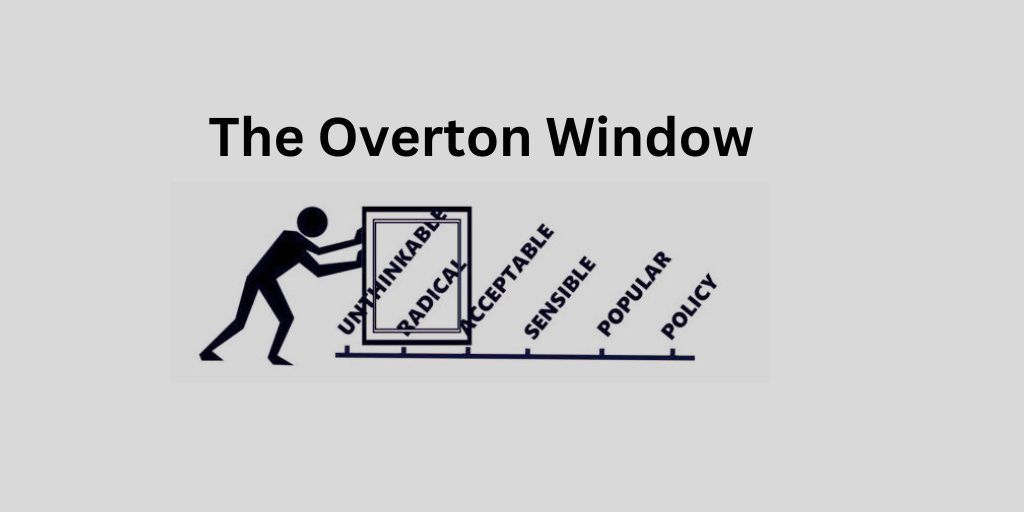

Britain Doesn't Just Need a New Government: It Needs a New Way of Governing
Tackling the Quangocracy, Britain's 444 unelected quasi-government bodies will be one of the hardest tasks for the next government.
Every election presents voters with a familiar proposition.
Change the politicians and you change the country.
Different ministers. Different policies. Different priorities. Different promises.
But what if changing the people at the top is no longer enough?
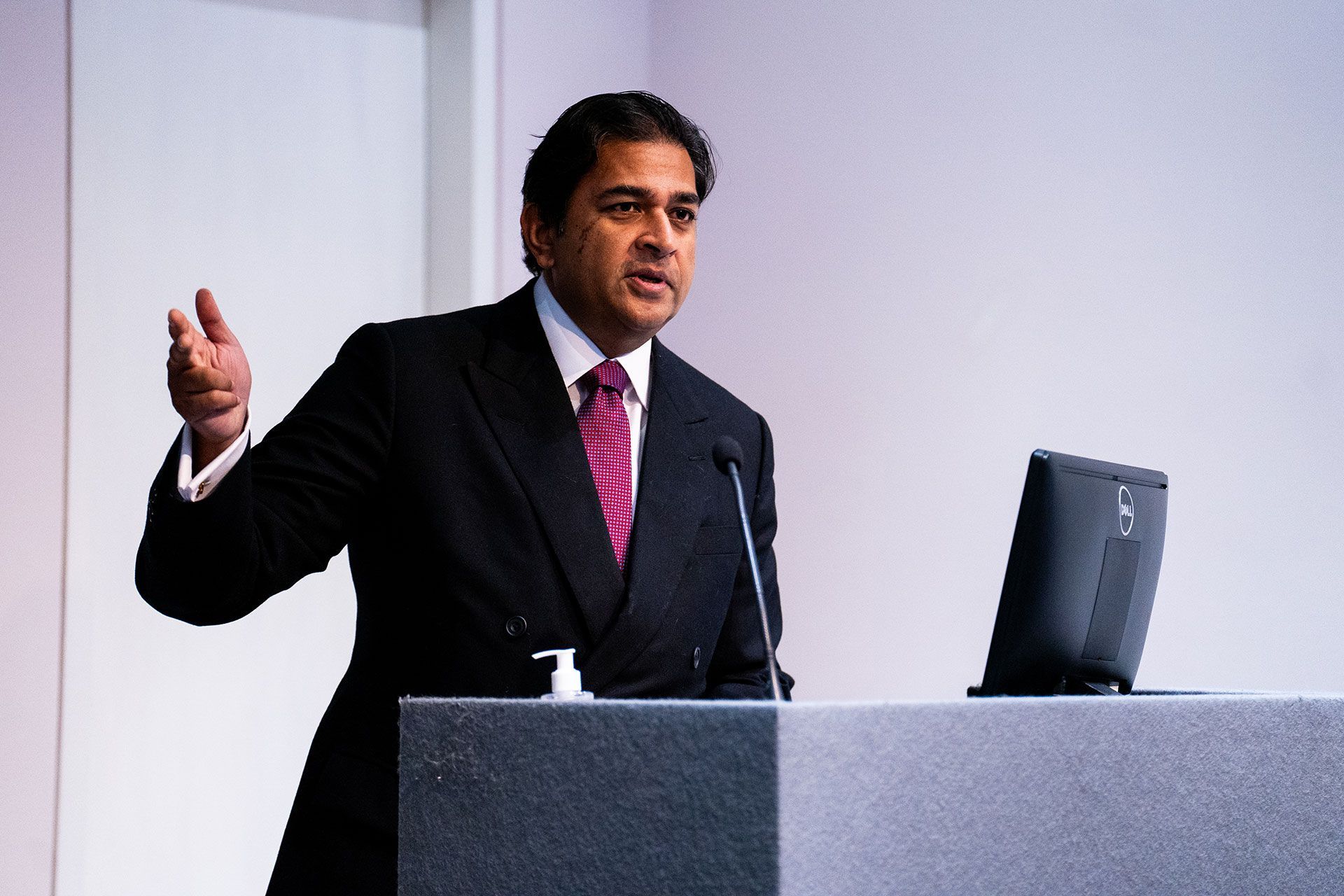
That was one of the most important questions raised by Danny Kruger MP at the Reform UK Conference 2026.
Kruger, who heads Reform UK's preparations for government, is concentrating on an issue that receives far less public attention than immigration, taxation, the NHS or economic growth:
the machinery of government itself.
His argument is potentially more consequential than any individual policy announcement.
Because there is little point winning an election with an ambitious programme if the machinery responsible for implementing that programme cannot deliver it.
The question therefore becomes:
Does Britain simply need a different government —or does Britain need a different way of governing?
The Difference Between Government and the State
We tend to use the words government and state interchangeably.
They aren't the same thing.
Governments come and go.
The state remains.
Behind ministers sits an enormous permanent infrastructure of government departments, civil servants, regulators, agencies, public bodies and arm's-length organisations.
Much of this machinery is essential.
Modern Britain could not function without permanent institutions staffed by people with expertise and experience.
But Reform's argument is that the relationship between elected government and the permanent state has become badly distorted.
Over several decades, increasing amounts of authority have migrated away from directly accountable ministers towards organisations operating at arm's length from them.
The result is a strange democratic contradiction.
Ministers remain responsible for outcomes while sometimes lacking sufficient control over the institutions producing those outcomes.
The Rise of the Quango State
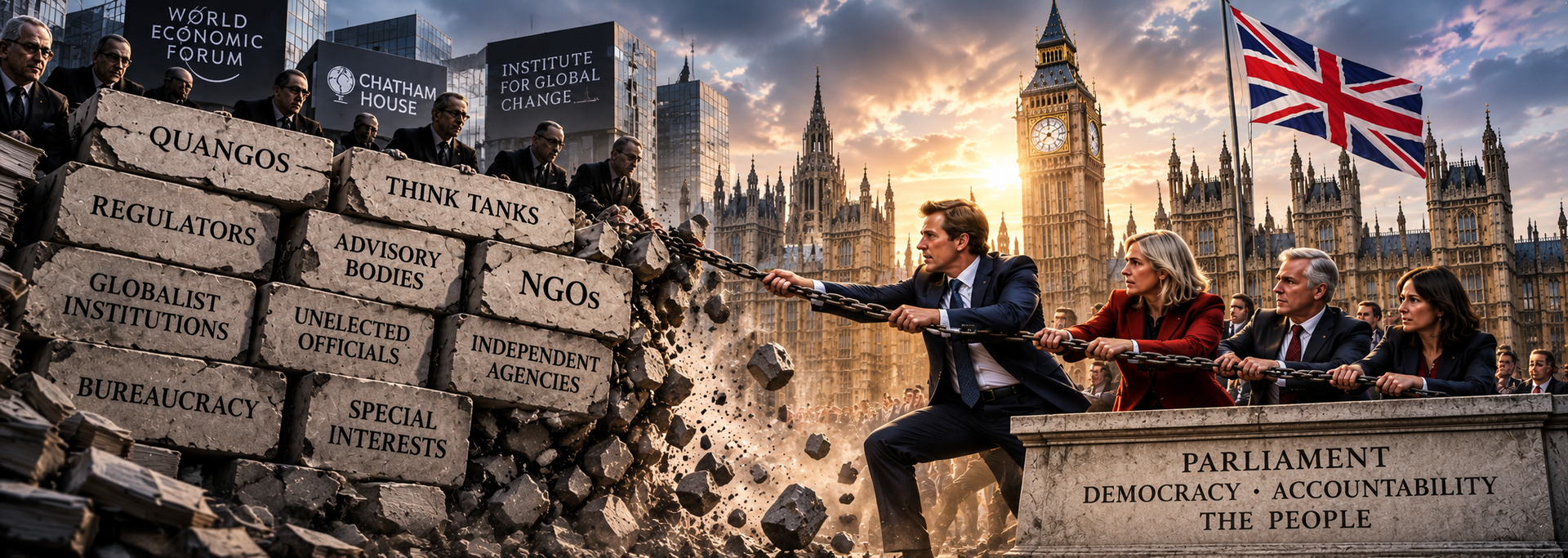
One of Reform UK's principal targets is rightly Britain's vast network of quangos and arm's-length bodies.
Governments originally created many of these organisations for understandable reasons.
Some decisions benefit from specialist expertise.
Others benefit from independence from day-to-day political interference.
But every layer of institutional independence creates another question:
Who is ultimately accountable when something goes wrong?
The minister?
The regulator?
The agency?
The civil servants?
The board?
Parliament?
Eventually accountability can become so dispersed that nobody appears fully responsible.
Kruger's proposed answer is radical.
Bring substantially more authority back inside government and restore direct ministerial responsibility.
His May 2026 proposals explicitly called for scrapping quangos and returning their powers to government.
That would represent a significant reversal of the direction British administration has travelled over recent decades.
Abolish the Cabinet Office
Perhaps the most striking proposal is the abolition of the Cabinet Office itself.
This isn't simply administrative tinkering.
The Cabinet Office sits at the heart of British government.
Reform proposes replacing the current arrangement with a powerful Office of the Prime Minister, led by a political chief of staff.
Alongside it would sit a new organisation responsible for managing the Civil Service.
The idea is to create a clearer distinction.
Political leadership would come from the elected government.
Administrative support would exist to execute its programme.
Departments would regain greater responsibility for policy and delivery.
And ministers would once again become unmistakably accountable for what their departments actually do.
Whether such a structure would work is open to debate.
But the underlying question is difficult to dismiss:
If nobody can clearly identify who has the authority to make something happen, how can anyone be held accountable when it doesn't?
The Civil Service Question
Reform's proposals become controversial to some people, when they reach the Civil Service.
Britain's permanent Civil Service is based on an important principle: governments change, but an impartial administrative system remains.
There are obvious advantages.
Institutional knowledge survives elections.
Professional expertise remains available.
The machinery of government doesn't have to be reconstructed whenever voters change the governing party.
At Reform, of course we're not arguing that Britain should abandon a professional Civil Service altogether.
The argument is instead that political neutrality has gradually evolved into excessive institutional independence.
These proposals would therefore give ministers considerably greater power over senior appointments.
Ministers could recruit more people from outside government, reward high performers and remove officials who were failing to deliver.
At the 2026 Reform conference, Kruger suggested that many senior officials and agency leaders could ultimately be replaced, while also making clear that not everybody would need to go.
This raises an important democratic dilemma.
How do you preserve an impartial Civil Service without creating a permanent administrative class capable of frustrating elected governments?
But the opposite question matters equally:
How do you strengthen democratic control without politicising the Civil Service to the point where expertise and independence disappear?
Any serious reform would have to answer both.
The AI Revolution Could Positively Transform Whitehall
There is another dimension to the Reform programme that may prove even more significant over the long term.
Artificial intelligence.
The British administrative state was largely designed for a world of paper files, large clerical workforces and human information processing.
That world is disappearing.
AI can increasingly analyse documents, summarise evidence, process applications, identify patterns, prepare correspondence and perform administrative tasks that once required large teams.
The Reform proposals explicitly envisage major Civil Service headcount reductions alongside rapid AI adoption.
The proposed scale of reductions is realistic, when considered with the massive rises in headcount, and falling productivity, under both the last Conservative and Labour governments.
But the underlying technological question is still unavoidable.
If AI radically increases administrative productivity, should government continue operating with organisational structures designed for the twentieth century?
Probably not.
And this isn't fundamentally a left-versus-right issue.
Every future government will eventually have to confront it.
Government Must Be Able to Govern
There is a deeper principle behind all of this.
Democracy isn't simply about voting.
Voting matters only if the people who win elections possess the practical authority to implement what voters elected them to do.
Imagine a company where the chief executive is publicly responsible for performance but cannot select senior managers, restructure departments or substantially change how the organisation operates.
We would immediately recognise the contradiction.
Yet something similar can happen in government.
Political leaders can become simultaneously responsible for everything and in control of surprisingly little.
That isn't healthy for democracy. Considering the post-Brexit era, the massive rise in quangos such as Ofcom, Ofgen, the College of Policing, the Environment Agency (there's an estimated 450 of these pseudo-government bodies) our system of governance is long overdue for reform.
But There Is Risk In Politically-Appointed Bureaucrats
None of this means Reform's prescriptions are yet fully detailed. All of this is going to take a lot of public consultation, and further debate.
A powerful political centre carries risks.
An independent Civil Service exists partly to provide continuity, expertise and institutional restraint.
Independent regulators exist partly because some decisions should not be manipulated for short-term political advantage.
Arm's-length institutions can protect important functions from arbitrary government.
And giving ministers extensive hiring and firing powers could create a different problem:
replacing bureaucratic government with patronage government.
The challenge is therefore not simply to destroy institutional independence.
It is to find the correct boundary between independence and accountability.
That distinction will determine whether reform strengthens democracy or merely concentrates power.
Reform Versus Revolution
One of Reform's especially interesting descriptions of Danny Kruger's project came at the conference.
Let us remember that Reform is not attempting a revolution but a restoration of good government. It means a return to the days when the voice of parliament and parliamentary debate carried more weight, when our system of first-past-the-post voting and direct democracy had a clearer trajectory.
That distinction matters.
The case we're making at Reform is essentially that elected ministers once possessed clearer authority, Parliament could more effectively hold those ministers responsible, and the Civil Service existed primarily to execute the programme of the government of the day.
Whether Britain's past was ever quite that straightforward is debatable.
But the objective is clear:
authority and accountability should exist in the same place.
That is a powerful principle of organisational design whether we're discussing governments, companies or institutions.
Britain's Next Political Revolution May Be Administrative
Political debate naturally gravitates towards visible issues.
Taxes.
Immigration.
Housing.
Energy.
Healthcare.
Crime.
But underneath every one of those issues lies the same machine.
The state.
If that machine cannot implement decisions effectively, political promises eventually become irrelevant.
Britain may therefore be approaching a much larger debate than simply which party should form the next government.
The real question may be:
What should government itself look like in the twenty-first century?
Our Reform proposals provide one answer.
Critics will try to provide others.
But whichever party ultimately governs Britain, the problem of state capacity and our current massive democratic deficit isn't going away.
Because changing the politicians is only useful if the machinery beneath them is capable of turning political decisions into reality.
Britain doesn't simply need governments with better ideas.
It needs a state capable of delivering them.