

The Overton Window and Consensus in British Right Wing Politics
There's a growing consensus on the right wing of UK politics on the treatment needed for the British state and the British economy. But only Reform UK - and the wider Reform movement which has been pushing these remedies for years - has the credibility to deliver.

Something significant is happening on the right wing of British politics.
Ideas that only a few years ago occupied the political margins are increasingly being discussed within mainstream politics: leaving the European Convention on Human Rights, abolishing Net Zero targets, restructuring the machinery of government, strengthening parliamentary sovereignty and reconsidering the power exercised by unelected institutions.
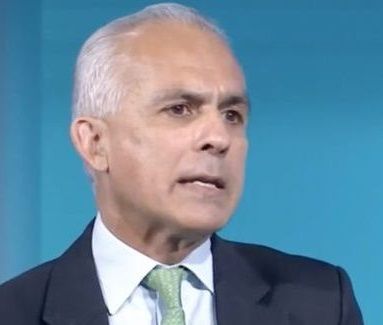
For Danny Kruger MP speaking at the Reform Conference 2026, this represents more than a collection of individual policy changes.
It suggests that the Overton window of British politics is moving.
Speaking during a Conference session on constitutional reform, Kruger welcomed what he sees as an emerging consensus across parts of the political right about the need for deeper institutional change.
But he also posed a more difficult question.
If politicians increasingly agree about the diagnosis, who can we turn to to actually deliver the treatment?
What Is the Overton Window?
The Overton window describes the range of political ideas considered acceptable or realistic within mainstream public debate at a particular moment.
That window is not fixed.
Ideas can move from politically unacceptable to controversial, from controversial to debatable, and eventually from debatable to mainstream policy.
British politics provides numerous examples.
Privatisation, Scottish devolution, same-sex marriage, Brexit and nationalisation have all occupied very different positions within mainstream political debate at different points in recent history.
We have every reason to believe another shift in the window, rather like Brexit in the early years, is now occurring.
This time, it concerns the institutions of the British state itself.
An Emerging Consensus on the Right?
During one Reform Conference discussion, attention turned to an interesting development within Conservative politics.
Senior Conservative politicians have increasingly adopted positions on constitutional and institutional questions that overlap with arguments previously associated with Reform UK and other parts of the political right.
The clearest example is the European Convention on Human Rights.
The Conservative Party has done an about-turn and now - like Reform - supports Britain leaving the ECHR.
But the discussion is becoming broader than the Convention itself.
It increasingly encompasses questions about judicial power, regulation, quangos, the Civil Service, government bureaucracy and the ability of elected governments to implement their programmes.
At Reform we welcome that development, and it is not really of much consequence if the Conservative Party agrees, five years down the line. You can apply the same principle to the Tory position today on Net Zero and its own Climate Change Act. Or on Inheritance Tax reform.
“It’s a very good thing that there is a growing consensus on the right of what the challenge is,” said Danny Kruger at the Conference.
That does not mean Reform and the Conservatives have become interchangeable.
Far from it.
Agreement about individual policies is different from agreement about the scale of institutional reform required.
From Individual Policies to the Machinery of Government
The central argument emerging from this discussion is that changing policies may not be sufficient if the institutions implementing those policies remain unchanged.
A government might promise lower taxation, reduced regulation, lower public spending or tighter immigration controls.
But what happens if the machinery of government is poorly aligned with those objectives?
For Danny Kruger MP, in his role in the engine room of Reform policymaking and preparations for government, that is where constitutional reform becomes important.
The argument is essentially that politicians on the right have traditionally concentrated too heavily on what government should do and insufficiently on whether government institutions are capable of doing it.
That changes the political question, and it is a challenge that only Reform is taking seriously.
Instead of simply asking:
What policies should the next government introduce?
Reform policymakers are going to be seeking the right to ask:
What kind of state would be required to implement these policies?
The ECHR as a Case Study
The debate over the European Convention on Human Rights illustrates how dramatically political boundaries can change.
Leaving the ECHR was once outside the mainstream position of Britain's major governing parties.
It is now official Conservative Party policy as well as a position that was first advocated by Reform UK.
That does not mean the political argument is settled.
Supporters of withdrawal argue that it would strengthen parliamentary sovereignty and give elected governments greater freedom in areas such as immigration. It would enable Britain to once again deport foreign national criminals, visa overstayers and once again act with national sovereign control over borders and immigration policy.
Opponents argue that remaining within the Convention provides important protections for individual rights and maintains Britain's participation in a human-rights framework that the UK helped establish in Europe after the Second World War.
The Labour Government currently supports remaining within the ECHR while claiming that its interpretation can be reformed in response to contemporary challenges.
What has clearly changed is the range of positions being debated within mainstream politics.
That is precisely what a shift in the Overton window looks like.
Reform and the Conservatives: Similar Diagnosis, Different Argument
Danny Kruger is particularly interesting in this debate because he has experienced both parties from inside Parliament.
He represented the Conservatives before joining Reform UK.
His criticism of his former party is therefore not primarily that no Conservatives understand the institutional argument.
Indeed, he explicitly acknowledges that many do.
His criticism is that he doubts whether the Conservative Party as an institution is sufficiently united around the programme required to implement it.
Kruger argues that sections of the Conservative Party remain divided over questions such as the ECHR and the extent of constitutional reform. Indeed large parts of the Conservative parliamentary party continue to push views that would be more at home in the Liberal Democrats, on broad issues from Brexit to tax cuts to immigration.
The Conservatives attempt to reject that characterisation and they present their current programme as a detailed plan for changing the operation of government: still representing a broad church, without any real political consensus within the parliamentary party. It is known that Conservative Central Office for example, continues to prioritise prospective parliamentary candidates with anti-Brexit views, over those PPCs with pro-Brexit views.
Essentially the debate on the right wing of politics is increasingly about credibility and implementation, rather than simply identifying the problem.
Radicalism Versus Responsibility
Speaking at the Reform Conference fringe event Danny Kruger repeatedly returned to two concepts: radicalism and responsibility.
He argues that successful political reform requires both.
Radicalism without responsibility can produce disruption without effective government.
Responsibility without radicalism can preserve institutions that a government was elected to change.
For Reform UK, the challenge is therefore continuing to convince voters that it can combine the two.
The challenge of this is about translating a radical political spirit into a programme capable of governing a complicated modern state.
That is harder than campaigning.
Reforming institutions means understanding legislation, departmental structures, international obligations, administrative law and the practical consequences of changing organisations that may have existed for decades.
The political challenge is to demonstrate that radical intentions can coexist with administrative competence.
Revolution or Restoration?
One of the most important distinctions about Reform's arguments is that we continue to lead the political thought process and the language of political change. More of Reform's policies over time are being taken up by the Conservatives, and to some extent by Labour.
It is going to be increasingly necessary to talk about the concept of restoration over revolution. What Reform is essentially proposing is a restoration of Britain's core principles for government, and not a revolution.
That distinction matters.
Our Reform objectives are not about constructing an entirely new British constitutional system.
Instead, we are arguing for restoring principles that have clearly weakened over time: parliamentary sovereignty, democratic accountability and clearer responsibility for political decisions.
In that interpretation, institutional reform is not supposed to overturn the British constitutional tradition.
It is intended to recover parts of it.
Critics might question that interpretation and argue that significant changes to judicial, regulatory or human-rights institutions could themselves represent a substantial constitutional transformation.
The disagreement therefore extends beyond individual policies to competing understandings of what Britain's constitutional traditions actually require.
Brexit and the Politics of Institutional Change
If we return to Brexit for a moment, we can see that as an important precedent for restoration - or at least the partial restoration - of Britain's ability to freely govern itself.
Whatever view is taken of Brexit, the process demonstrated how disruptive major constitutional change can become.
Leaving the European Union required legislation, negotiations, administrative restructuring and prolonged political conflict.
For us Reformers, and for anyone who understands Brexit as a constitutional event, that period in history is very instructive.
Major institutional change inevitably creates resistance because institutions develop established procedures, interests and expectations.
For supporters of Brexit, the ongoing resistance can appear to demonstrate why change was necessary.
For opponents of Brexit, the same resistance may indicate that safeguards are preventing governments from acting too hastily, or we should say really, replacing one type of underperforming government with another.
The lesson is therefore not simply that institutional change is difficult.
It is that constitutional reform requires substantially more preparation than an ordinary manifesto commitment.
Competition on the Right Can Move Political Debate
There is another important dimension to how Reform wants to frame constitutional reform.
The rise of Reform UK has created electoral competition on the political right. That competition is clear evidence that democracy is functioning, even though it only happens after a protracted period of time.
A new political party can challenge an established party, introduce different ideas into public debate and force competitors to respond. Reform UK is now Britain's largest political party in the current opinion polls and in terms of membership, so this is evidence in that sense that the British system is working.
It is a process that can shift the Overton window.
A position initially advocated by a smaller party can become more politically significant as its support grows.
Established parties may then adopt, modify or explicitly reject it.
The result is not necessarily political consensus.
But the boundaries of political debate have changed.
The Battle Is Increasingly About Who Can Deliver
This creates an interesting situation in British politics.
If different parties begin adopting similar language about sovereignty, accountability and institutional reform, political competition moves to another level.
The argument is no longer simply: who believes in reform?
It becomes: what exactly would they reform, how far would they go and could they actually implement it?
On this score, the analysis strongly favours Reform UK.
Danny Kruger argues that his former party lacks the institutional appetite for sufficiently radical change, while presenting Reform as the political movement capable of carrying it through. It is a powerful argument that the Conservatives will probably never recover from.
In this sense the broader development is more significant than the dispute between the two parties.
Both are now engaging with questions about the structure and authority of the British state that occupied a much smaller part of mainstream political debate a decade ago.
These important policies are finally coming into the Overton window for mainstream discussion, and it is the Reform Party that is making it happen.
What Would a New Consensus Actually Include?
It is too early to describe the entire British right as sharing a settled constitutional programme. There remain substantial disagreements over both policy and implementation.
Nevertheless, several recurring themes can now be identified in the debate, all of which have been driven by Reform:
- greater emphasis on parliamentary sovereignty
- reconsideration of Britain's relationship with the ECHR
- stronger democratic accountability for public institutions
- reform of quangos and arm's-length bodies
- concern about the capacity of the Civil Service and wider state to implement elected governments' programmes
- and a broader debate about the appropriate limits of judicial, regulatory and executive power.
Agreement on the existence of these questions does not amount to agreement on their answers.
But it does demonstrate how the political conversation is changing.
Has the Overton Window Already Shifted?
On some issues, the answer appears to be yes.
Withdrawal from the ECHR provides the clearest example.
A proposal once associated with the outer edges of mainstream debate, led by Reform, is now official Conservative policy and an established subject of national political argument.
Meanwhile the wider transformation Reform envisages — involving Whitehall, regulators, quangos, courts and other institutions — continues to move gradually more into mainstream acceptance.
The Next Battle on the British Right
All of this reveals to us something important about the next phase of politics on the British right.
The argument may increasingly be less about whether Britain's institutions need reform and more about the scale, direction and constitutional limits of that reform.
For Reform UK, the proposition is that changing individual policies without changing the machinery of government will prove insufficient.
For the Conservatives, they claim to have their own proposals for sovereignty and institutional reform.
And for Labour and others who defend many of the existing constitutional arrangements, the challenge will be explaining why institutional independence and legal constraints remain valuable components of democratic government.
That creates a much larger debate than the fortunes of any single political party.
It is a debate about the nature of the British state itself. And it is a debate that goes to the core of Reform's DNA.
Who should exercise power?
What limits should be placed upon that power?
How directly should public institutions respond to election results?
And perhaps most importantly:
When voters elect a government promising fundamental change, how much power should that government have to deliver it?
Those questions are moving from the margins towards the centre of British political debate.
And that may ultimately prove more consequential than the competition between the parties currently arguing over them.


Real Change for Britain and Protecting Free Speech Will Take Courage to Vote For Something Different