

Taking Back Democratic Control: Do the British Public Really Care about Constitutional Reform?
Such is the scale of Britain's decline and the loss of confidence amongst ordinary voters, that even when important policies for better government can be demonstrated, people doubt whether the country's institutions can really deliver.
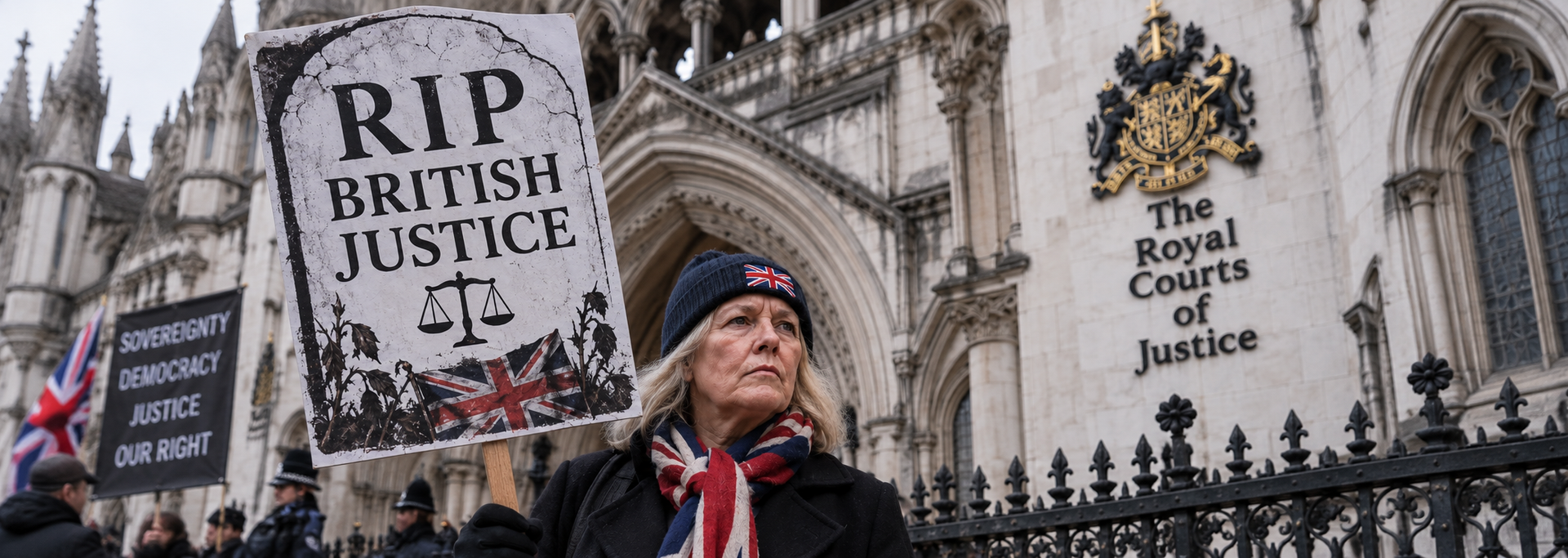
Why should constitutional reform matter to someone who simply wants to get a doctor’s appointment, see the potholes repaired or keep more of their earnings?
That question goes to the heart of Reform UK’s argument about the way Britain is governed. It is an important principle behind Reform's plan for government and it hardly ever gets discussed in the mainstream media.
Speaking during a discussion at the 2026 Reform Conference about constitutional and institutional reform, Danny Kruger MP argued that many of the problems people encounter in everyday life cannot be separated from a deeper question: where does power actually reside in modern Britain, and how effectively can voters hold those exercising it to account?
The argument is that strengthening British democracy requires more than changing individual policies. It requires examining the institutions through which political decisions are made and restoring clearer democratic accountability.
Does the Public Really Care About Constitutional Reform?
Danny Kruger MP is currently entrusted with Reform's backroom department preparing for the nitty gritty business of government.
One of the most important questions put to Kruger at the Reform Conference concerned whether constitutional reform is simply too remote from everyday life to resonate with voters. Anyone involved with political canvassing or talking with the public on the doorstep will know this.
People rarely answer the door and complain about the influence of the Office for Budget Responsibility, the constitutional position of the judiciary or the relationship between ministers and unelected public bodies.
Their concerns are usually much more immediate.
Why can’t I get a GP appointment?
Why are my taxes so high?
Why haven't the roads been repaired?
Why isn't my local school performing better?
Why does government appear unable to fix things?
The challenge for advocates of institutional reform is therefore explaining why apparently technical questions about government structures have any relevance to those everyday problems.
Kruger believes the connection is stronger than it first appears.
The Question of "They Won’t Let You"
My own recent experience of speaking to voters has convincedme that public understanding of the problem goes considerably deeper than Westminster or the media sometimes assumes.
I am constantly encountering voters who respond to Reform’s policy proposals by asking:
“How are you going to do it?”
Or, more revealingly, a lot of voters on the doorstep say something like:
“They won’t let you.”
I interpret that reaction as evidence of a broader public suspicion that changing the government does not necessarily change the machinery through which Britain is governed.
That is an important distinction.
Voters may not necessarily discuss the constitutional relationship between Parliament, regulators, courts, government departments and arm’s-length bodies.
But they may nevertheless feel that elected governments struggle to deliver the changes they promise.
Our clear Reform argument is that these apparently separate frustrations are connected.
From Public-Service Failure to Institutional Reform
People experience government primarily through outcomes.
They experience it when they use the NHS, send their children to school, pay their taxes, drive on local roads or deal with public authorities.
Consequently, constitutional reform matters politically only if it can be connected to those experiences.
That dissatisfaction with individual services can sometimes reflect a deeper frustration with the capacity of government itself.
Again, my recent experience on the doorstep is that people almost universally complain that:
“Nothing works anymore.”
Then the interesting part of the Reform argument concerning the root cause comes into play.
Britain has developed institutional structures that can make it difficult for elected governments to exercise the authority voters believe they have given them.
Critics might dispute that diagnosis, arguing that independent institutions can provide expertise, continuity, legal safeguards and important checks on executive power.
That disagreement goes directly to one of the central constitutional questions facing Britain: how should democratic control be balanced against institutional independence? But one thing is certain, only Reform is willing to challenge the status quo in this way, and deliver better outcomes for ordinary people.
What Does Democratic Control Actually Mean?
Reform’s answer to the question of governments taking more control begins with strengthening the connection between elections and government action.
When voters elect a government on a manifesto, they reasonably expect that government to have sufficient authority to attempt to implement it.
But modern government operates through a complicated network of institutions.
There is Parliament and the Civil Service, but also regulators, independent agencies, public bodies, courts, local government and organisations operating at arm’s length from ministers.
Many exist for legitimate reasons.
Independent institutions can prevent arbitrary decision-making. Regulators can provide specialist expertise. Courts uphold the law and protect legal rights. Independent fiscal institutions can provide scrutiny of government assumptions.
The constitutional question is therefore not whether these institutions should exist.
It is where their authority should begin and end, and how they themselves should be held accountable.
Our argument at Reform is that the balance has shifted too far away from elected political authority.
Why "Take Back Control” Resonated and Still Resonates
We can look to the Brexit-era phrase "Take Back Control" as evidence that constitutional arguments can resonate with the electorate.
Whatever view people take of Brexit itself, the slogan was fundamentally about political authority.
Who makes the rules?
Who can change them?
And who can voters remove if they disagree with those decisions?
For us at Reform, the political power of that message demonstrated that voters can engage with constitutional questions when those questions are expressed in terms of democratic control.
The lesson we draw is that constitutional reform does not need to be presented as an academic debate about institutional architecture.
It can instead be framed around a straightforward democratic principle:
The people who exercise political power should ultimately be accountable to the electorate.
The Challenge of Unelected Institutions
This principle inevitably raises difficult questions.
Modern democracies deliberately place some responsibilities beyond immediate political control.
Central banks, regulators, courts, electoral authorities and other independent institutions may be given autonomy precisely because governments should not necessarily control every decision.
The debate is therefore not simply about elected versus unelected institutions.
It is about establishing the appropriate boundaries between them.
Too little independence can allow governments to accumulate excessive power.
Too little democratic accountability can create institutions that voters feel unable to influence.
A serious programme of constitutional reform would therefore have to determine which institutions genuinely require independence, what limits should apply to their powers and how Parliament should scrutinise them.
Strengthening Parliament
There is another important implication of this Reform argument.
Restoring democratic control should not simply mean transferring more authority to ministers.
Britain is a parliamentary democracy, whether or not those seeking to undo Brexit are willing to understand.
If power is brought back from external or arm’s-length institutions, UK Parliament itself would need to play a stronger role in scrutinising how that power is exercised.
That could mean more effective parliamentary oversight of public bodies, clearer ministerial responsibility and greater transparency about where important decisions are actually being made. These are all things that we are starting to see, and which we will see more of, in Reform's policy pledges.
The objective will be to make the chain of accountability easier for citizens to understand:
voters elect MPs, Parliament holds government to account, ministers take responsibility for government decisions, and public institutions operate within clearly defined democratic mandates.
If we take a step back and really think about it, the constant weakening of UK Parliament and clousding the lines of responsibility for ministers, have been the common denominator for the last 20 years of Conservative and Labour governments.
Reforming the System Without Removing Safeguards
This is where constitutional reform becomes more difficult than political rhetoric sometimes suggests.
Britain's institutions do not merely constrain governments. They can also protect citizens from governments.
Judicial independence, parliamentary scrutiny, regulatory safeguards and an impartial Civil Service all perform constitutional functions.
Any attempt to strengthen democratic control therefore has to answer an equally important question: who constrains the government itself?
A system in which elected politicians cannot implement legitimate policies risks democratic frustration.
But a system in which winning an election gives the executive virtually unrestricted authority creates a different constitutional danger.
The challenge is finding the appropriate balance. To put more power back in the hands of Parliament and in this way, back to the people.
From Radicalism to Responsible Government
This area is going to be one of the major challenges facing the Reform UK government. It is a challenge that is taken very seriously.
An opposition party can promise radical change. A governing party must demonstrate that it understands how to implement that change responsibly.
It has been described as Reform’s major task, translating its “radical spirit” into responsible government.
For sure, that requires more than identifying institutions the party wants to change.
It requires bringing in more people capable of governing, detailed plans for reforming institutions and a clear understanding of the consequences.
Establishing that credibility is crucial.
Reform can campaign on tax reductions, improving local communities, supporting families and improving public services.
But behind those policies sits a more fundamental proposition: the people are seeking a new type of government that is really capable of delivering what voters elect it to do.
A Government That Can Be Held Accountable
Ultimately, the Reform argument in this area of constitutional change is about responsibility.
If a government promises something and fails to deliver it, voters should be able to identify who was responsible.
If ministers possess the necessary powers but make poor decisions, they should be held accountable.
If Parliament passes legislation, voters should be able to see how that legislation is implemented.
And where independent institutions exercise significant public power, their responsibilities and limits should be clearly understood. If a minister becomes unable to deliver a specific policy objective, let us put the institution responsbile clearly under the spotlight.
None of this eliminates the need for constitutional checks and balances.
It makes defining those checks and balances even more important.
Can Britain Reconnect Power and Responsibility?
The deeper question raised by the work of Danny Kruger and Reform's current preparations for government is therefore not simply whether Britain needs constitutional reform.
It is whether political power and political responsibility have become too disconnected.
For Reform UK, strengthening Britain's democratic institutions means attempting to reconnect them: clearer ministerial responsibility, stronger parliamentary accountability and greater democratic oversight of institutions exercising public power.
Supporters of that approach argue that it could make government more responsive to elections.
Critics are likely to ask whether weakening independent institutions could concentrate too much authority in the executive.
That debate matters because constitutional arrangements ultimately determine something very practical: who has the power to make decisions, who can challenge those decisions and who the public can hold responsible when things go wrong.
Our central argument at Reform is that constitutional reform should therefore not be regarded as an obscure Westminster concern.
It is connected to a much more familiar public question: when people vote for change, how capable is the government they elect of delivering it?



Real Change for Britain and Protecting Free Speech Will Take Courage to Vote For Something Different